TL;DR
A family-friendly compound is more than a play area and a pool. It supports daily routines through safe movement, useful amenities, outdoor space, community and design that works for children and parents alike. This guide explains what to look for in family-friendly compound features in KSA, how to compare options and which details actually matter for everyday family life.
What Does Family-Friendly Really Mean?
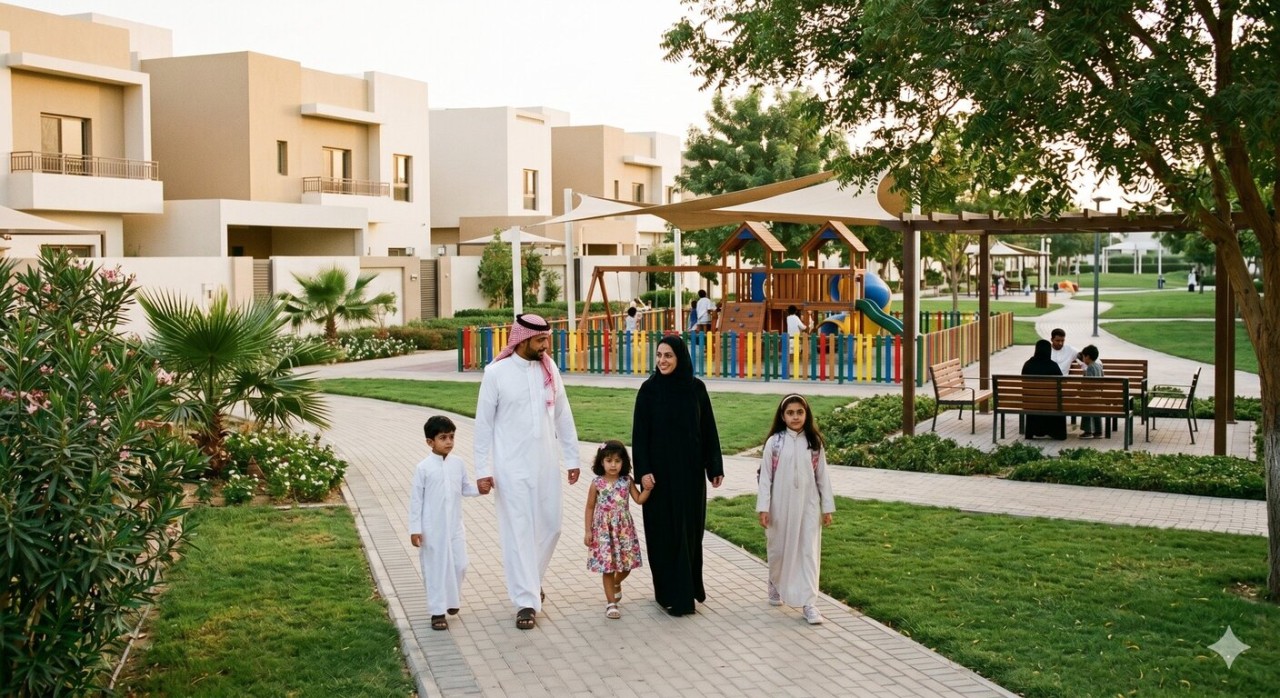
A family-friendly compound is not just a compound with a kids' play area. It is a place where the full living environment supports family life. Children can move safely, parents can manage daily routines more easily, and the compound feels comfortable enough for the family to settle into.
A strong family-oriented compound usually supports:
- Safe movement for children
- Practical family amenities
- Outdoor spaces for play and relaxation
- Easy access to schools and healthcare
- Shared areas where families can connect
- A layout that makes daily life easier
When these elements work together, a compound feels more than convenient. It feels livable.
For families relocating to Saudi Arabia, including expat families, these details matter even more. The compound often becomes one of the first places where children build routines and parents begin to feel settled.
|
Family need |
What to look for in a compound |
Why it matters |
|
Safety |
Controlled access, secure play areas, clear pathways, good lighting |
Helps parents feel more comfortable letting children move around |
|
Daily convenience |
Nearby schools, clinics, supermarkets, and main roads |
Reduces stress around school runs, errands, and urgent needs |
|
Children’s routines |
Playgrounds, sports zones, indoor play areas, open spaces |
Gives children safe ways to play, socialize, and stay active |
|
Outdoor comfort |
Green areas, shaded seating, walking paths |
Makes the compound feel more open, usable, and family-friendly |
|
Community |
Family events, resident activities, shared spaces |
Helps families feel connected, especially when new to the city |
|
Practical living |
Family-sized layouts, parking access, storage, maintenance |
Makes everyday routines easier for parents |
What Families Should Look For
1. Safety Comes First
For most families, safety is the first filter. Before looking at pools, gyms or community spaces, parents need to feel that the compound is secure, well-managed and suitable for children.
Safety and security for families can include controlled entry and exit points, security staff, visitor management, safe internal roads, well-lit shared areas, clear walking paths, secure play areas, regular maintenance and easy emergency access.
Safety is not only about gates and security staff. It is also about the small design details that shape daily life. A playground located away from moving cars feels very different from one placed near an internal road. A well-lit walking path feels more usable in the evening. A stroller-friendly walkway can make simple daily movement much easier for parents.
These details help families feel more comfortable using the compound, not only living inside it.
2. Children Need Spaces That Match Real Life
A play area is important, but it should not be the only sign of a family-friendly compound. Children have different needs at different ages. Younger children may need safe playgrounds and indoor playrooms. Older children may need sports zones, open areas or places where they can move, play and socialize.
Useful kids' play areas and sports zones may include outdoor playgrounds, indoor play areas, football or basketball courts, multi-purpose sports zones, cycling or scooter-friendly paths, shaded seating for parents, safe flooring around play equipment and open areas for casual play.
The best child-friendly spaces are the ones families can actually use often. A play area that is too far from the homes may not become part of the daily routine. A sports court without shaded seating may be less practical for parents. An outdoor area without clear safety design may make families hesitant to use it.
|
Age Group |
Useful Compound Features |
|
Toddlers |
Safe playgrounds, shaded areas, soft flooring, stroller-friendly access |
|
Young children |
Play zones, open lawns, indoor activity rooms, secure outdoor areas |
|
Older children |
Sports courts, cycling paths, multi-purpose zones, open play areas |
|
Teenagers |
Fitness areas, sports facilities, social spaces, community activities |
A family-friendly compound should also support children as they grow. A space that works well for toddlers may not be enough for older children. Families often stay in a compound for several years, so it helps to think about both current needs and future routines.
3. Outdoor Space Makes a Big Difference
Green spaces in compounds are often treated as a lifestyle bonus, but for families they can be part of everyday life. Children need room to run. Parents need places to walk, sit and take a break. Families need outdoor areas where they can spend time together without always leaving the compound.
Good green spaces may include landscaped gardens, open lawns, walking paths, shaded seating areas, picnic-style spaces, outdoor gathering spots and calm areas away from traffic.
These spaces can make the compound feel more open and balanced. A short walk after dinner, a quiet morning outside, or children playing nearby can all help the compound feel more like home.
For families navigating expat family housing in Saudi Arabia, outdoor space can also help the adjustment feel easier. It gives children a familiar rhythm and gives parents more ways to make daily life feel settled.
Which Amenities Actually Matter for Families
A long list of amenities can look impressive, but families usually need to know which features will actually support daily life. The strongest family amenities in compounds are the ones that make routines easier, healthier or more enjoyable.
These may include swimming pools, gyms, walking tracks, sports courts, fitness rooms, children's activity areas, shared family spaces and health and wellness amenities.
A swimming pool, for example, is not only a nice feature. For many families, it becomes part of weekends, after-school routines and social life. A walking track may help parents stay active without leaving the compound. A sports court may give older children a regular place to spend their time.
From a renter's perspective, the issue is rarely whether an amenity exists. The real issue is whether it is accessible, maintained and relevant to the family's daily routine.
The question should not be only "How many amenities does this compound have?" A better question is "Which of these amenities will my family actually use?"
|
Feature |
What Listings Say |
What Families Should Check |
|
Swimming pool |
"Pool available" | Is it suitable for families? Is there seating nearby? Is it well-maintained? |
|
Playground |
"Kids' area" | Is it safe, shaded, age-appropriate and away from traffic? |
|
Sports courts |
"Sports facilities" | Are they usable for children and teens? Are they easy to access? |
|
Green spaces |
"Landscaped gardens" | Can families actually sit, walk and spend time there? |
|
Gym or wellness area |
"Fitness facilities" | Are the facilities practical for parents' routines? |
|
Community spaces |
"Shared areas" | Do families use them? Do they support social connection? |
|
Maintenance |
"Maintenance available" | Is support responsive and reliable for everyday issues? |
Community and Design: What Makes a Compound Feel Livable
1. Community Helps Families Settle In
A compound can have strong facilities and still feel disconnected. For families, community can make a real difference, especially when moving to a new city or relocating from abroad. Children may need friends nearby. Parents may want familiar faces, shared activities or simply a sense that the compound is not just a group of separate homes.
Community features for families may include children's activities, seasonal events, family days, sports gatherings, resident meetups, holiday celebrations, workshops or classes and community announcements.
Not every family wants a very active compound, and not every community needs constant events. But there should still be enough shared life for residents to feel connected when they want to be. That sense of connection is often what turns a compound from a place to stay into a place where families can settle.
2. Design Can Make Family Life Easier
Some family compound must-have features are easy to notice. Others are built into the compound's design. Child-friendly design can affect daily life as much as the amenities do. It can make movement easier, reduce stress and help families use shared spaces more comfortably.
Child-friendly design may include safe pedestrian routes, play areas away from internal roads, easy access from homes to amenities, family-sized layouts, practical storage, safe balconies or terraces, quiet areas, nearby parking and shaded outdoor spaces.
These details matter because families move differently. Parents may be carrying bags, pushing strollers, walking with children or managing several routines at once. A playground close to residential units is easier to use. Shaded outdoor areas are more comfortable. Safe walkways make it easier for children to move around.
Good design does not always stand out in photos, but families feel its impact every day.
3. Location Shapes the Family Routine
Even the best compound can feel difficult if the location does not support daily life. For families, location affects school runs, work commutes, grocery trips, healthcare visits, weekend plans and how much time everyone spends in the car.
School access for expats and families relocating to Saudi Arabia is often one of the biggest considerations when choosing a compound. Families should look at distance to schools, travel time during peak hours, access to international schools if needed, nearby nurseries or early learning centers, school transport options and morning and afternoon traffic patterns.
A compound may look like the right fit, but a difficult school commute can quickly affect the whole family's routine.
Families should also look at how close the compound is to everyday services, including hospitals, clinics, pharmacies, supermarkets, main roads, work areas, malls, restaurants and children's activity centers. These details may seem simple, but they shape how comfortable life feels.
A good family compound should work well inside the gate and connect easily to the life around it.
How to Compare Family-Friendly Compounds
When comparing family-oriented compounds, photos and unit size are useful, but they do not tell the whole story. A clearer way to compare options is to ask practical questions:
- Would my children feel safe here?
- Are the play areas suitable for their age?
- Is there enough outdoor space?
- Are the amenities useful for our routine?
- Is the compound close to school?
- How long would daily commutes take?
- Are healthcare services nearby?
- Does the community feel active, calm or family-oriented?
- Are there shared spaces where families can connect?
- Does the design make daily life easier?
Instead of asking which compound looks better, it becomes easier to ask which compound fits the way your family actually lives.
|
What to compare |
Compound A |
Compound B |
Compound C |
|
Safety and security |
|||
|
Distance to school |
|||
|
Healthcare nearby |
|||
|
Kids’ play areas |
|||
|
Sports and activity zones |
|||
|
Green spaces |
|||
|
Community activities |
|||
|
Family-sized layouts |
|||
|
Daily commute |
|||
|
Overall family fit |
Most property listings are built around basic information: number of bedrooms, unit size, location, price, photos and a short amenities list.
These details are important, but they do not always explain the living experience. For families, the missing details are often the most important ones. Is the compound suitable for children? Are the outdoor spaces usable? Are schools and healthcare services nearby? Does the community feel active? Do the amenities support real routines?
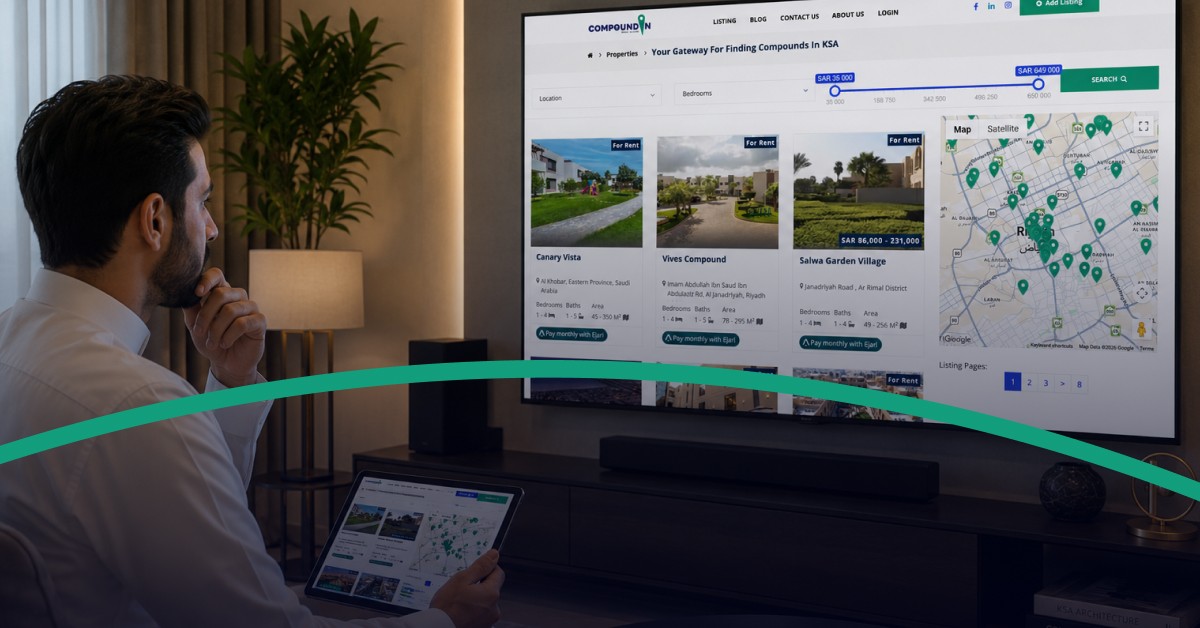
Instead of treating compounds as simple listings, CompoundIn gives renters more context around the features, amenities, community details and location advantages that shape daily life. For families, this creates a clearer way to evaluate whether a compound could genuinely fit their needs before they inquire.
This is especially useful for families comparing options from outside the city or before visiting in person. A clearer view of the compound experience can help renters narrow their shortlist with more confidence.
Use our platform CompoundIn to compare family-friendly compounds with more clarity, from amenities and location to community features and lifestyle fit. For a broader view of the housing landscape, see our guide to expat housing in Saudi Arabia.
Final Thoughts
Choosing a family-friendly compound in Saudi Arabia should feel practical, not overwhelming. The right compound is the one that supports your family's real life: school mornings, quiet evenings, active weekends, daily errands, children's routines and the comfort of feeling settled.
That means looking beyond the photos and asking better questions about safety, amenities, location, community and design.
A truly family-friendly compound is not about one standout amenity. It is about whether the whole place works for the way your family lives.
Still deciding? Join our resident-to-resident WhatsApp community, where expat families across Saudi Arabia share recommendations for compounds, schools and family life. Join the community.